
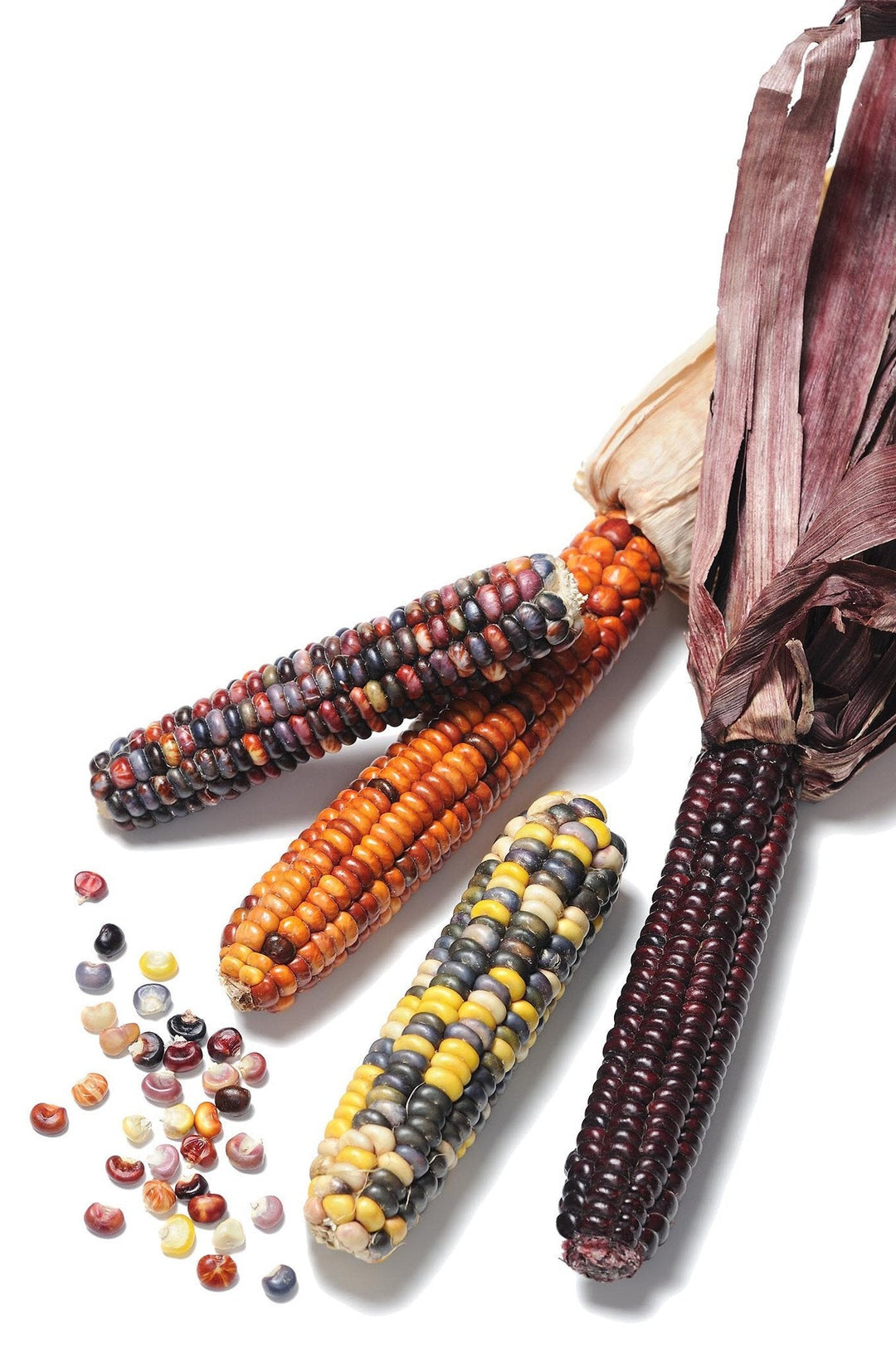
Organic Painted Mountain Corn Seeds - Zea mays
Organic Painted Mountain Corn Non-GMO Pollinated Seed
Originated from over 70 Native corns rescued from Indians and homesteaders who inhabited some of the harshest regions in the North America, from the Northern Rockies to the Great Plains. This concludes that Painted Mountain can be grown in a wide range of climates from drought ridden areas to high altitude. Considered one of the most high yielding crops in stressed conditions and known to grow where others fail.
The gene pool offered a wide genetic diversity offering a wide spectrum of every color of the rainbow. Stalks are purple and yellow. Protein levels are higher than most commercial corn. Can be easily ground, made into hominy, toasted or eaten directly. It is known to be high in anthocyanins which are valuable antioxidants.
One of the favorite things we've ever grown, Painted Mountain lives up to it's name. You never know what to expect when shucking an ear, although you are guaranteed something beautiful. The individual kernels can be any color of the rainbow and beyond often having a star burst pattern. Bred to be the hardiest corn in the world, it is full of nutrition and has been used to help feed people stricken by famine. Developed by Dave Christensen from over 70 Native corn varieties many of which are now extinct. This corn can grow almost anywhere! The plants are short averaging about 5" and can be green or a wonderful magenta color. Often used as an ornamental, it is also great roasted, boiled as semi-sweet corn(at milk stage), used for hominy grits, or easily ground (you can use a clean coffee grinder or a vita-mix) into a nutritious flour for tortillas, corn bread, or griddle cakes.
Seed Profile
- Organic
- Non-GMO
- Annual
- Sun: Full
- Indoors: 6 weeks before last frost
- Direct Sow: After last frost
- Seed Count: 100
- Days to Maturity: 75-90
- Plant Size: 12"-18"
Gardener Tips
Plant in short blocks or short rows, for effective pollinating- a minimum of a 6' x 6' square is recommended. Needs nitrogen, phosphorous, moist soil and room to grow. Corn is a heavy feeder, amend soil after harvest.
Harvesting Tips
Allow for corn to fully dry down on the stalk. Check for proper pollination by peeling back a couple of cobs and assure that pollination reached the end of the cob.


