
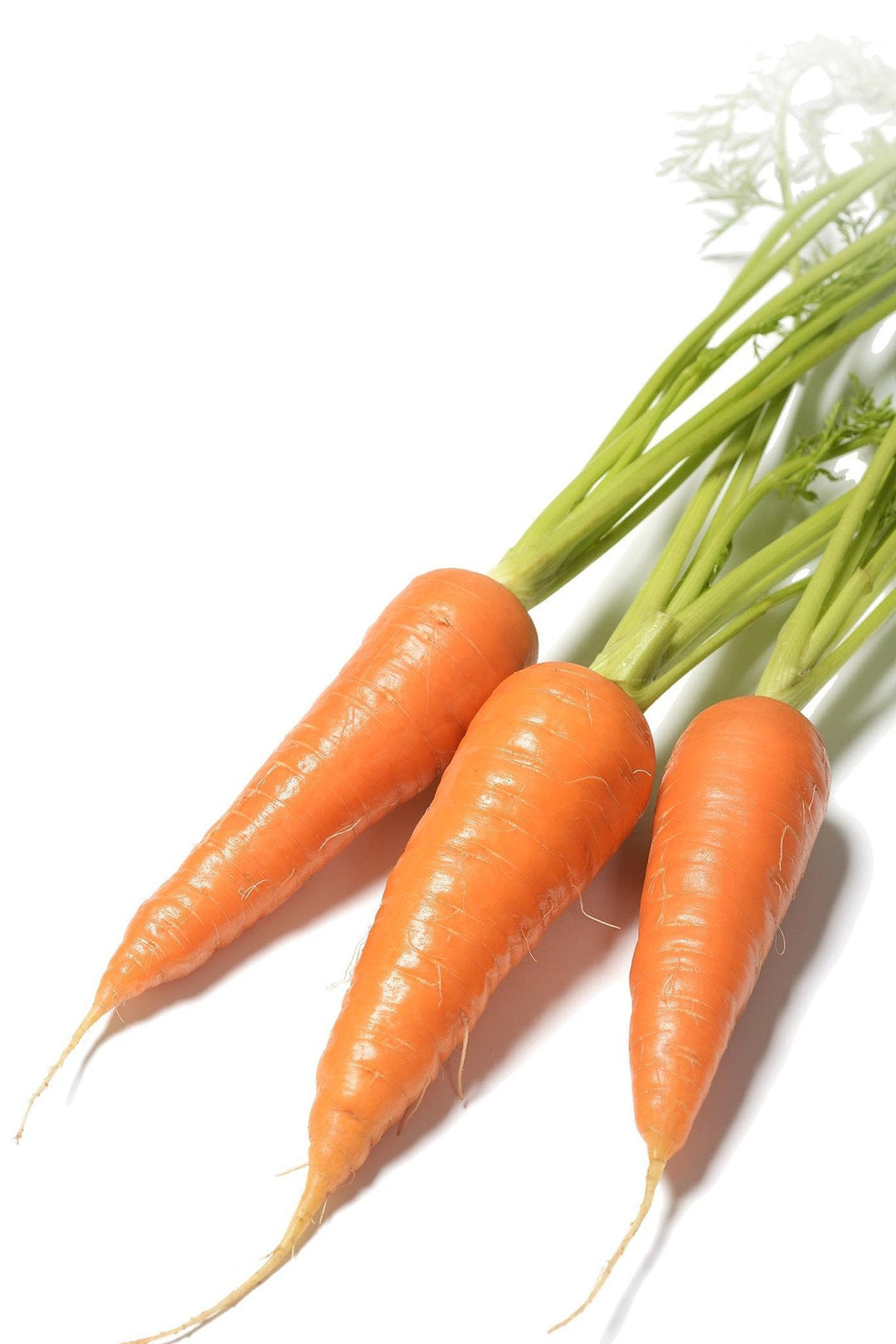
Organic Red Cored Chantenay Carrot Seeds - Daucus carota
Organic Non-GMO Open-Pollinated Red Cored Chantenay Carrot Seeds
Developed in the Chantenay region of France in the 18th century, this gem of a carrot remains popular with top chefs to this day. This amazing root lost "commercial" appeal due to mechanization of the food industry because of its short, wide shouldered stature. But those who know carrots have brought it back in the ongoing Food Renaissance.
Sweet, crisp with deep "carrot" flavor and no need to peel. Expect roots about 5"- 6" long with broad shoulders and a classic carrot shape. Their deep red-orange core is rich in flavor and are one of the best fresh and sliced on the table. Try them juiced, shredded in salad, lightly steamed, roasted, in soups or stew, and stir fried. Chantenay pairs well with almonds, butter, cream, cheddar, Parmesan and pecorino, ginger, cardamon, potatoes, garlic, mushrooms, shallots and balsamic vinegar to name a few potentials. Truly the possibilities are endless!
Seed Profile
- Organic
- Heirloom
- Open-Pollinated
- Non-GMO
- Biennial: For seed saving
- Exposure: Partial- Full Sun
- Direct Sow: 25 days before last frost
- Seed Count: 600
- Days to Maturity: 60-100
- Plant Size: 9"-12"
Gardener Tips
Wet soil before planting. Mix seeds with coffee grounds for better seed distribution. While seeds are germinating, keep soil evenly moist. Apply mulch once established. Prefers cool, moist soil. Plant every 3 weeks for successive harvest.
Unlike many carrots, Chantenay types perform well in heavier or clay soils due to their shorter, tapered shape. Ideal if your customers don’t have sandy beds.
Should be directly seeded directly into the soil. They do not want their roots disrupted and want to be able to send them down as soon as they are planted.
Harvest Tips
-
Loosen Soil First: Gently loosen the soil with a garden fork before pulling to avoid breaking these vibrant roots.
-
For an even sweeter flavor, wait until after a light frost—cooler temperatures convert starches into sugars.
-
Remove tops immediately after harvesting to prevent moisture loss. Store roots in a cool, humid environment, like a fridge or root cellar.


